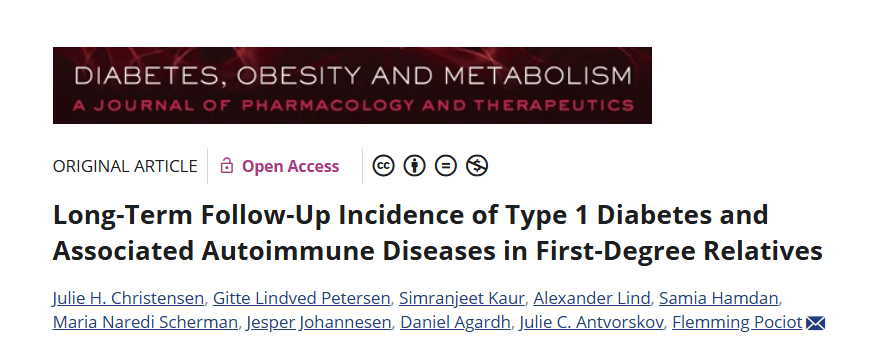
What happens when people at increased risk of type 1 diabetes are identified early and followed over time? A newly published study in Diabetes, Obesity and Metabolism provides an important part of the answer.
Through a single childhood autoantibody test and long-term national registry follow-up, the DiaUnion 1.0 project followed more than 1,400 siblings of children with T1D. The study showed that the presence of islet autoantibodies was strongly associated with future development of the disease. The researchers further found that individuals with multiple autoantibodies had a substantially higher long-term risk of progressing to clinical type 1 diabetes, compared to those without autoantibodies.
The researchers also assessed markers associated with celiac disease and autoimmune thyroid disease and found that children were more likely to get T1D, if they had developed autoantibodies associated with the two other diseases. This underlines the value of combined autoimmune screening and demonstrates that signs of T1D can be identified years before symptoms appear and long before the disease is clinically diagnosed.
The findings support one of DiaUnion’s core ambitions: enabling earlier detection of people at increased risk of T1D and creating opportunities for timely follow-up, greater disease awareness and, ultimately, earlier intervention.
As disease-modifying therapies become a reality, the value of identifying type 1 diabetes before clinical onset is becoming increasingly clear. This research adds to the growing evidence that earlier detection can play an important role in the future management of the disease.
Congratulations to all behind this important contribution from the DiaUnion collaboration.
Read the publication here: https://doi.org/10.1111/dom.71194
